
Flexibility & Mobility: My Story, and Why It Matters to You
I spent a big part of my 20’s and 30’s ‘getting stronger’. Eventually, I realized I was losing some of the things that had made me athletic in the first place.
That realization changed the way I think about fitness, and it eventually changed the way I train.
Here's how I got there, and why I think it matters to you, too.
I was born to move
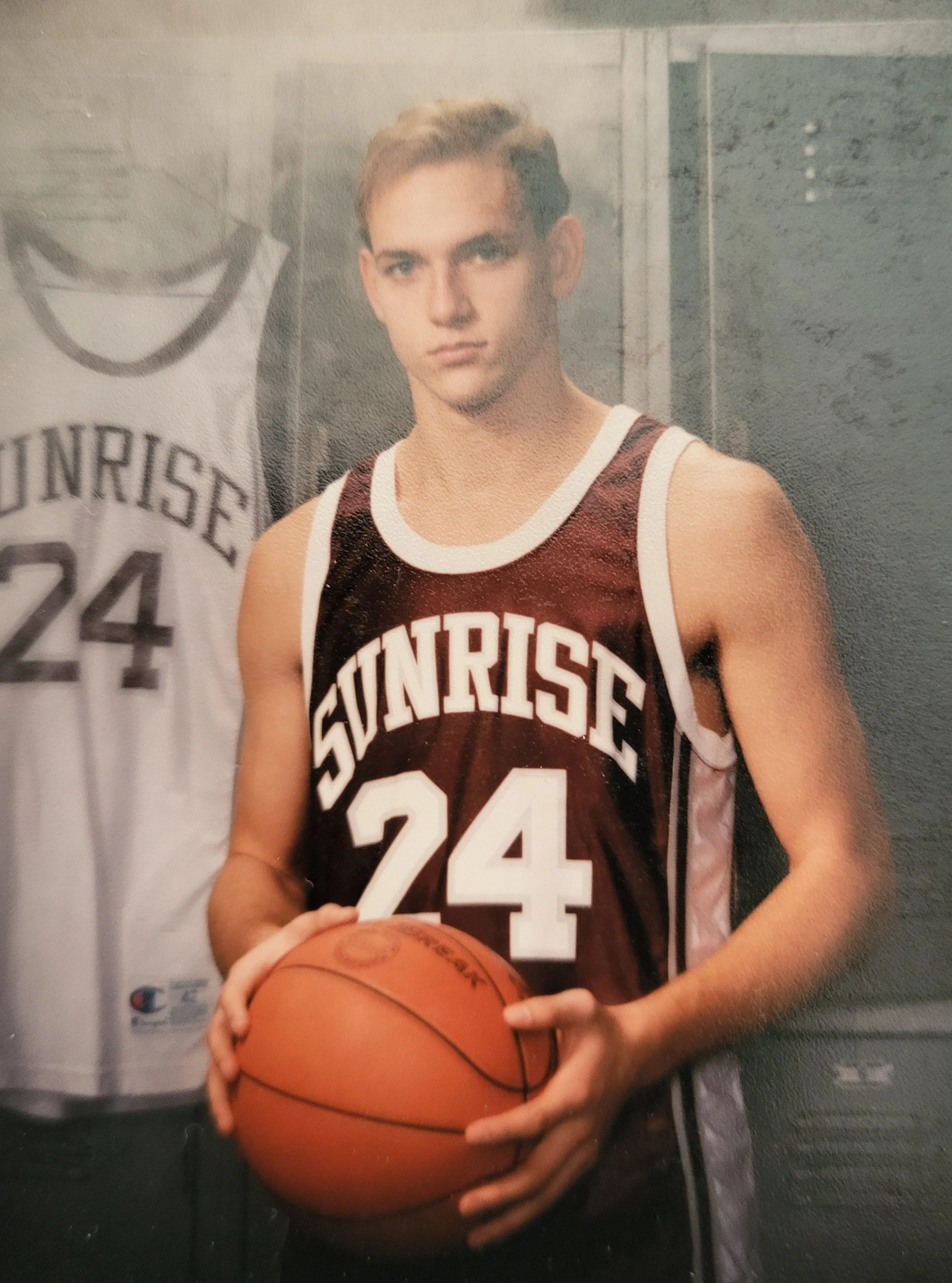
The author in ‘90s senior picture glory
I grew up in Kansas, in a mid-sized town where sports were a big deal. For me, sports were a necessary outlet. It was where I had the most confidence, and a connection to a world outside my school and church.
I loved every sport, mostly because I loved the freedom and joy of playing hard and seeing what I could do. Playing hard never felt like work.
I lived in a neighborhood without kids my age, though, so I had to find my own ways to satisfy my need for athletic expression. I came up with some crazy stuff sometimes.
From the time I could stand up, I wanted to run, jump, and throw things. I was constantly trying to jump up and touch things I couldn't reach. My mom was forever telling me to stop leaving dirty fingerprints above the doors and on the ceiling.
I took old scraps of lumber and nails out of the garage and built myself a high-jump bar that I could move up and down, then flopped into the tilled dirt along the edge of our garden. I'd race anybody willing to run any distance for any reason. We had two enormous black walnut trees in our yard, and those green-husked walnuts were perfect little baseballs for small hands and I threw at anything that wouldn't break. And a few things that would.
You get the idea.
I was pretty good at these things, partly because I practiced them constantly without realizing I was training. When I showed up with other kids to play sports, I had confidence that I'd be one of the fastest runners, one of the highest or farthest jumpers, and one of the hardest throwers.
I didn't always know what I was doing in the actual games. I had my share of confidence and anxiety issues, too. But I trusted my ability to respond with my body, even when I wasn't entirely sure what to do I’d just get creative and try to make it work.
That carried me through high school, college baseball. I was never going to be a professional anything, but I was competitive, and I loved testing myself physically.
Then organized sports ended.
I wasn't ready to be done.
Discovering the weight room
After college, I needed something to replace the competition and structure I'd always had in sports. I found an American Goju karate class through the local recreation commission.
I knew absolutely nothing about martial arts or the difference in styles and how you move up. I soon learned that the style I chose had only four belts to earn, and the tests were much harder than I'd imagined.
My first belt test involved a whole lot of everything: 300 pushups, 300 situps, a three-mile run, three minutes of punching, three minutes of kicking, and more.
I somehow made it through.
The next test doubled much of that workload. I really wanted that belt, but after barely surviving half the test, I knew there was no way I was passing unless I got a lot stronger.
That was the first time I bought a gym membership with a real purpose.
The problem was that I had no idea what to do when I got there.
So, as one does on a nice Saturday morning in Kansas, I went pond fishing with a college friend who played football and checked my ego enough to admit that I had no idea how to start lifting weights.
He grabbed the envelope from my gas bill off the floorboard of my Ford Escort and wrote out a bodybuilding split with a construction pencil.
Chest and triceps. Back and biceps. Legs and shoulders. Repeat twice a week, take one day off. Buy some protein and creatine, eat tuna and chicken, and drink protein shakes.
So that's what I did, every day, to the letter.
I got up early enough to be waiting for the gym doors to open at 5:15 a.m. so I could finish my workout before work. Some days I was so sore I could barely move, but I was committed. I wanted that belt.
And within about six weeks, I was noticeably stronger. People started asking if I'd been working out. It felt great. I wanted to wear tighter t-shirts for the first time.
Then, just as I was getting into a groove, the gym suddenly closed. They backed up a truck in the middle of the night, loaded everything up, and split town.
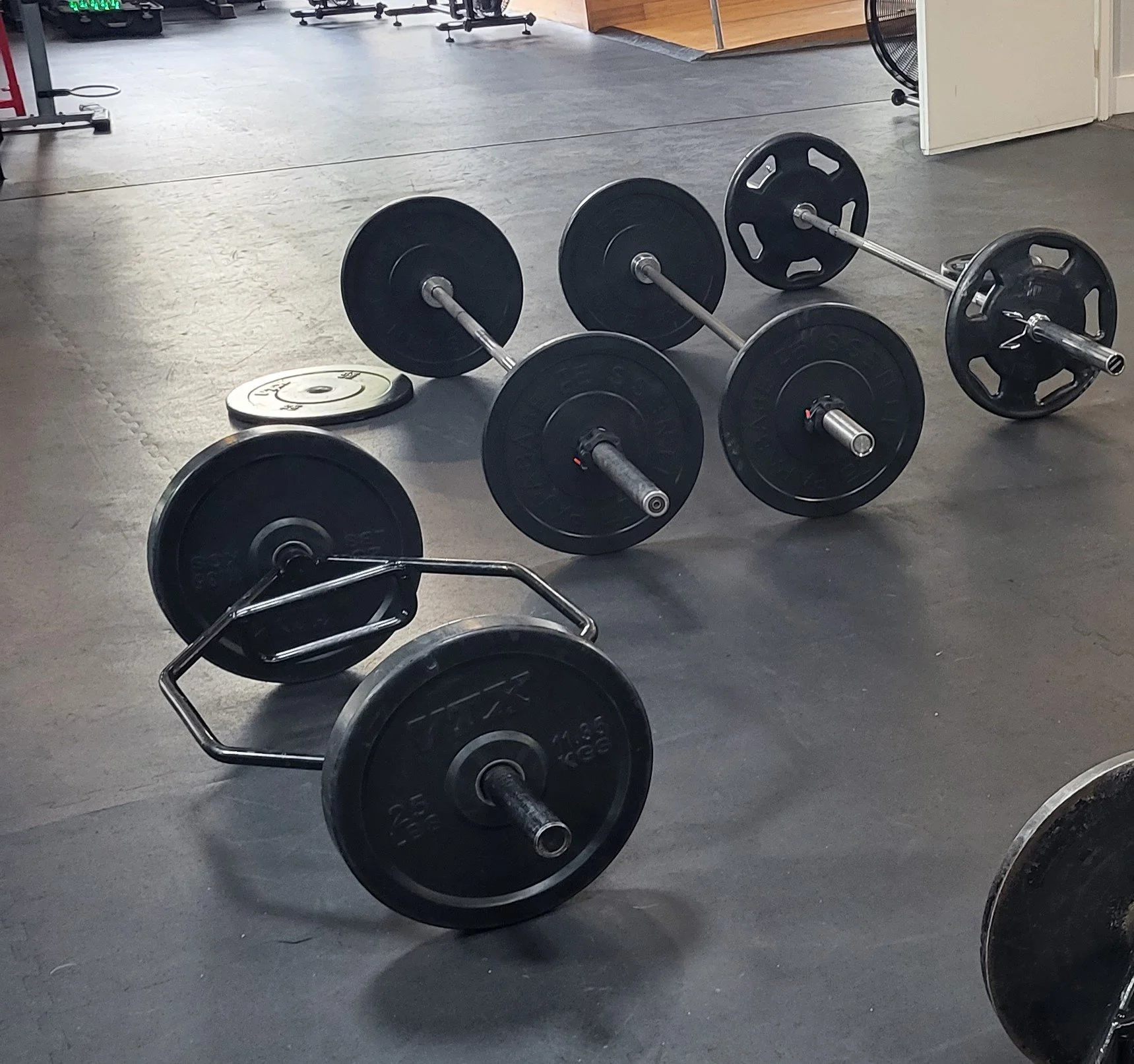
My choices were the expensive YMCA or a no-frills weightlifting gym across the railroad tracks. It had no climate control, no cardio equipment, and plenty of rusty or homemade equipment. But it was packed with racks, barbells, plates, and dumbbells. Best of all for a broke 25 year old, it cost $25 a month, and I got a key to come and go whenever I wanted.
That's where I met four of the strongest people I've ever known in real life.
They noticed me coming in every day, working hard through a pile of bodybuilding exercises, and took pity on my ignorance. They taught me how to lift with barbells, how to pursue strength, and how to build muscle. They were generous with their knowledge and never made me feel inferior.
I got bigger. I got stronger. And I fell completely in love with lifting.
Eventually, I joined the Army and stopped doing karate, but I kept working out. During my deployment to Iraq, I decided to pursue personal training as a career. I earned a certification through a distance-learning program and, when I came home, started down the path I've been on ever since.
For years, my fitness pursuits revolved around getting stronger. I experimented with Olympic lifting, a popular program that calls it’s gyms ‘boxes’, and different training programs, but the basic goal stayed the same: lift more weight than last time.
I wasn't playing sports anymore. I wasn't training for a specific athletic goal. I was simply trying to get stronger.
And then I had the realization that changed everything.
When getting stronger wasn't enough
I remember the moment clearly, even though I couldn't tell you exactly what triggered it.
I'd spent years developing my strength, but I had stopped practicing many of the things I'd once been naturally good at.
I could squat and deadlift more weight, but I couldn't run as fast or jump as high. My chest and shoulders were bigger, but I couldn't throw a ball as hard. I had become good at lifting heavy weights slowly, but I'd neglected many of the skills that made me a well-rounded athlete.
Some of that came down to body weight. I played college baseball at around 165 pounds. At my heaviest, I was around 235 pounds, deliberately eating enough to maintain that size.
Some of it came down to training specificity.
Strength and power are related, but they're not the same thing. Strength is your ability to produce force. Power involves producing force quickly. A heavy squat and a basketball dunk both require strength, but they demand different combinations of speed, coordination, and force production.
When I was younger, I regularly ran, jumped, cut, and threw. Those movements were part of my life. Later, my training became much more repetitive and focused on a narrower set of physical abilities.
I hadn't necessarily become worse at everything. I'd simply stopped training for many of the things I wanted to be able to do.
And that raised a bigger question.
What else had I lost without realizing it?
The knee injury that changed my priorities
Flexibility wasn't something I'd thought much about for most of my life.
My coaches hadn't spent much time evaluating it. I rarely had problems that made me think about it. And when I was playing sports, I was constantly taking my body through large, varied ranges of motion.
Then, in 2009, I tore my meniscus.
It hurt badly enough that I couldn't just grit my teeth and push through it anymore, and I eventually had the surgery. While that was healing, a huge portion of my usual training was off the table. No running, no leg training. Everything had to slow down or stop.
I didn’t like it. It was boring.
After all the work I'd put into building my body, I felt like I was watching it disappear. What was I supposed to do now?
As frustrating as it was, the injury forced me into an opportunity to reconsider my approach to fitness.
I was already scheduled to take a Functional Movement Screen course that my boss had generously paid for. The FMS is a standardized way of assessing certain fundamental movement patterns by making you do some really awkward things without cheating.
I was appalled at how poorly I performed some of them.
I'd completed the course and earned the certification, but I couldn't even demonstrate some of the movements properly myself. If I was going to ask other people to work on their movement, I needed to take a serious look at my own.
So, while my knee was healing, I made movement work a daily priority.
My routine included a variety of exercises: static stretches, active mobility work, and self-massage techniques. I worked on them consistently for about eight weeks.
Progress was slow, but it was noticeable. For the first time, I stopped thinking of flexibility as something you either had or didn't have. I started treating it as a quality I could work on and improve.
My training had changed dramatically, and so had my eating habits. I no longer needed the same amount of food to support my previous training and body weight, and I lost almost 50 pounds.
That was a personal outcome, not a result I would expect from mobility work alone. My circumstances were unusual: I'd been deliberately eating in a calorie surplus to maintain a much larger body, and then my activity and eating patterns changed.
But the weight loss wasn't the most surprising part.
Rediscovering freedom of movement
Once my knee was cleared and I felt confident enough to return to more athletic activity, I started noticing really great things.
I could sprint reasonably well again, and it didn't feel terrible.
I could jump again. Before my heavy lifting years, jumping was always my jam. I was a good long jumper, I could dunk a basketball anytime I wanted. At my strongest and heaviest, I couldn't even touch the rim. After changing my training and losing the weight, my vertical jump improved dramatically.
Throwing felt more natural. Shooting a basketball and climbing around on a playground with my kids felt easier. I felt less stiff and awkward.
And the benefits weren't just athletic.
I felt lighter. I felt calmer. I was in a better mood. My workouts felt better, and cardio became something I actually looked forward to instead of something I dreaded.
Fewer and fewer things were making me go, "Ugh, I don't want to do that."
Some of those changes likely came from losing weight, changing my training, rebuilding movement skills, and getting back into cardio shape. I can't separate every variable or claim that flexibility alone produced all those results.
But the experience changed how I approached fitness, and flexibility and mobility are core to those changes.
I never returned to powerlifting as a primary pursuit. I began asking different questions.
Instead of asking, "How big or strong can I get?" I started asking:
How long can I keep doing this?
How many different things am I still able to do with my body?
How good does it feel to do those things?
Those questions still guide my approach today.
Fitness should never be just about what you do in the gym. It's about what you can do when you leave it.
So what do flexibility and mobility actually do?
First, it helps to understand the distinction.
Flexibility describes the available range of motion of a muscle and the associated tissues around a joint. Mobility is about how well you can move through and control a range of motion.
They're closely related, but they're not identical.
You might be able to relax into a deep stretch when someone else helps you, but struggle to control that same position yourself. On the other hand, you might have plenty of strength but lack the range of motion needed to perform a movement comfortably.
That's why I don't think the answer is simply to stretch everything that feels tight.
A useful approach considers the whole body, identifies the movements that are limited or uncomfortable, and then chooses the right combination of flexibility work, active mobility, and strengthening.
Here are a few principles that guide my approach.
1. Look beyond the obvious.
The place where you feel discomfort rarely the only factor involved. Movement can be influenced by several muscles and joints working together, along with strength, coordination, training history, and other factors.
Rather than repeatedly attacking the spot that feels tight, look at the movement as a whole. And when pain is persistent or concerning, get an appropriate clinical assessment rather than assuming stretching will fix it.
2. Use more than one tool.
Static stretching can help improve range of motion. Active mobility exercises help you practice controlling that range. Dynamic movements, such as controlled arm circles and leg swings, can prepare you to move through a range of motion more actively.
Foam rolling and other self-massage techniques can also help some people feel more comfortable and temporarily improve range of motion. They aren't magic, and you don't have to eliminate knots or physically break up tissue to benefit.
The key is choosing the right tool for the right purpose.
3. Don't forget strength.
Sometimes a movement needs more than stretching. You may also need to develop strength and control in a particular position or through a particular range of motion.
Flexibility, mobility, and strength should complement one another. The goal isn't to become loose for the sake of being loose. It's to build a body that can move through the ranges you need and control them confidently.
4. Make it specific to you.
Not everyone needs the same exercises, the same amount of work, or the same goals. Your training history, current abilities, activities, and limitations all matter.
A good plan should start by understanding where you are now, then give you a manageable way to make progress.
And it should be something you can actually stick with.
Why I'm telling you all this
I've spent more than 20 years working in fitness and experimenting with different ways of training. I've pursued size, strength, athletic performance, and general health at different points in my life.
Nothing changed my perspective quite like rediscovering my freedom of movement.
I'm not saying anyone should stop lifting heavy weights, stop playing their sport, or become a yogi (unless you want to, that’s cool too.) Strength is essential. Athletic performance is valuable. Different people have different goals, and that's a good thing.
But I believe there's a piece of the puzzle that many people overlook. Sometimes on purpose.
At some point, you may notice that things you used to do without thinking don’t feel good anymore or feel like they’re not worth the effort. Maybe you can't bend your knees and hips at the same time anymore without something hurting. Maybe reaching overhead feels restricted. Maybe getting down on the floor and back up isn't as easy as it once was.
Maybe you've simply stopped doing some basic and ordinary things because your body doesn't seem to want to cooperate anymore.
You don't need to accept all of that as an inevitable part of getting older.
Your body will change over time, and not every limitation can or even should be eliminated. But you have some control here, maybe more than you think.
You don't need anything very complicated.
You need a sensible plan, the right exercises for your needs, and enough consistency to make progress.
That's what I want to help people do.
Your Next Step:
Let's get you moving better
I'm interested in bringing people together who want more out of fitness than chasing a number on a barbell or a scale.
People who want to feel better, move with more confidence, and keep doing the activities they enjoy or re-start the ones they stopped. People who are willing to do smart work, who want and need that work to have a clear purpose.
I'd love to help you figure out where you're limited, what deserves your attention, and how to start making progress with a plan tailored to you.
I can work with you one-on-one or in a group, in person or virtually. We can look at how you move, identify useful priorities, and build a practical approach that combines mobility, flexibility, and strength.
You don't have to settle for a body that does less and less. Let's work on giving you more options.
I'm also interested in connecting with people who would like to be part of a group working toward these goals together.
If any of this resonates with you, send me a message. Tell me what you'd like to be able to do more comfortably, what you've been struggling with, or what you wish your body would let you do again.
Let's start there